Why peptides are supplied freeze-dried
Most research peptides are supplied as a lyophilised (freeze-dried) solid rather than as a solution. Lyophilisation removes water by freezing the material and then sublimating the ice under vacuum. Because many chemical degradation reactions need water as a reactant or as a medium, removing it slows them dramatically, and solid protein and peptide products are generally much more stable than the same molecules in solution [1].
Lyophilisation itself, however, imposes stresses – freezing, ice formation and drying – and the residual moisture left in the cake, the storage temperature and the composition of the solid all influence long-term stability [1]. A 2020 review also describes how components can become unevenly distributed within a lyophilised solid, which can affect stability and analysis [4].
How peptides degrade
A widely cited review of protein pharmaceutical stability divides degradation into chemical and physical pathways [2]. The chemical pathways most relevant to synthetic peptides include:
- Deamidation of asparagine and glutamine residues, often via a cyclic succinimide intermediate.
- Oxidation, particularly of methionine, cysteine, tryptophan and histidine residues.
- Hydrolysis of peptide bonds, especially at aspartate residues.
- Disulfide scrambling and other cross-linking reactions.
- β-elimination and racemisation.
Physical instability includes aggregation, adsorption to surfaces and precipitation [2]. The peptide-impurity literature lists the same families – succinimide, pyroglutamate, diketopiperazine and oxidation products – among the degradants found in peptide materials [3]. Sequence matters: a peptide rich in methionine is more exposed to oxidation, while Asn-Gly and Asp-Gly motifs are classic deamidation and isomerisation sites.
The four variables to control
Moisture. Water is both a reactant and a plasticiser in lyophilised solids, increasing molecular mobility; the residual moisture content is one of the most important stability factors for freeze-dried proteins [1]. Keep vials sealed until use, and minimise the time an opened vial spends exposed to humid air.
Temperature. Rates of chemical degradation increase with temperature [2]. Lyophilised peptides are commonly stored frozen, typically at −20 °C, with the specific condition for each product given on its label and certificate.
Light. Some residues, notably tryptophan, are susceptible to photo-oxidation [2]. Storing vials in their cartons or in the dark removes this variable.
Oxygen. Oxidation is one of the main chemical pathways for susceptible residues [2]. Sealed vials limit oxygen exposure; repeated opening increases it.
Good laboratory practice
The following are common laboratory practices that follow from the pathways above. They are general handling notes for analytical and in-vitro work, not instructions for any other use:
- Let cold vials reach room temperature before opening. Opening a cold vial in room air can condense moisture onto the solid.
- Avoid repeated freeze–thaw of solutions. Where a stock solution is prepared for an assay, dividing it into single-use aliquots avoids repeatedly cycling the whole stock.
- Record handling. Note the lot number, date of opening and storage conditions in your laboratory records, so that unexpected results can be traced back.
- Use appropriate containers. Peptides can adsorb to some surfaces, which matters most at low concentrations [2].
- Follow your local risk assessment and the safety data supplied with the material.
Solvent and buffer choice depends on the sequence and on the assay; the peptide’s charge and hydrophobicity largely determine what dissolves it. We do not provide preparation guidance for any use other than laboratory research.
Solid versus solution
The stability advantage of a lyophilised solid largely disappears once the peptide is dissolved. In solution, water is freely available for hydrolysis and deamidation, dissolved oxygen supports oxidation, and molecules are mobile enough to aggregate or adsorb to container walls [1][2]. The pH of the solution also matters: deamidation and peptide-bond hydrolysis are both pH-dependent processes [2].
For that reason, laboratories generally prepare solutions as close as practical to the time of use, record the solvent, concentration and date, and treat stored solutions as a separate material with its own, shorter usable life. If an assay result changes over the life of a stock solution, degradation of the stock is one of the first explanations to rule out – an LC–MS comparison against freshly dissolved material is a direct way to check.
Peptides containing cysteine deserve particular care, because free thiols can oxidise to form disulfide-linked dimers or scramble existing disulfide bonds [2]. Oxidation-prone residues such as methionine show up as a +16 Da mass shift per oxidised residue in mass spectrometry, a useful diagnostic when re-testing a stored material.
Shelf life and re-testing
A certificate of analysis describes a lot at the time it was tested. If material has been stored for a long period, or under uncertain conditions, the safest assumption is that the original certificate may no longer describe it. Laboratories that need certainty re-test identity and purity by LC–MS before critical experiments – see our guide to HPLC and mass spectrometry.
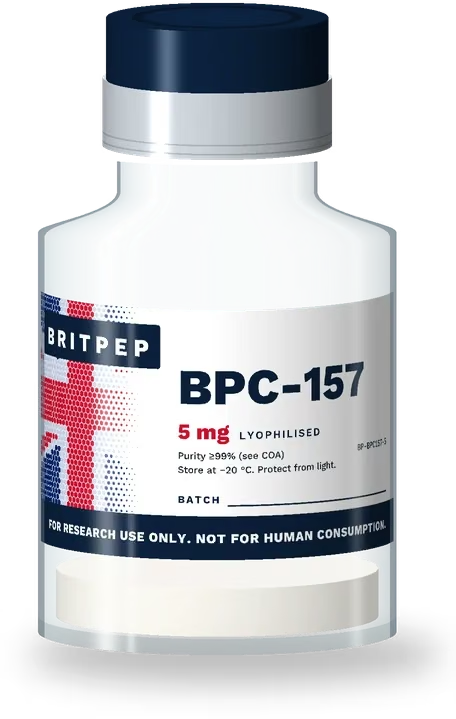
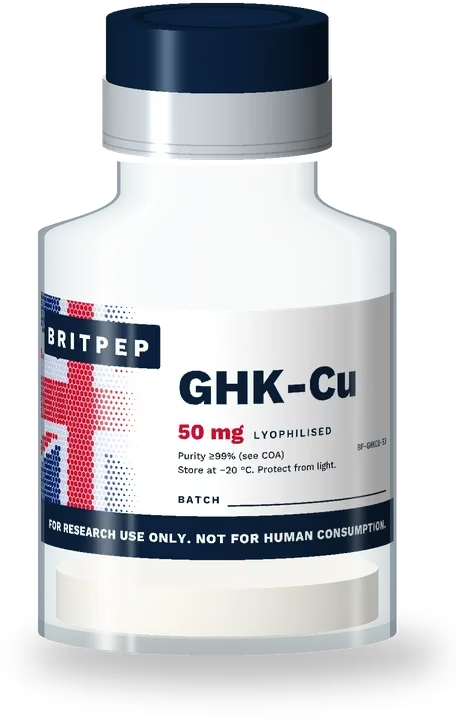
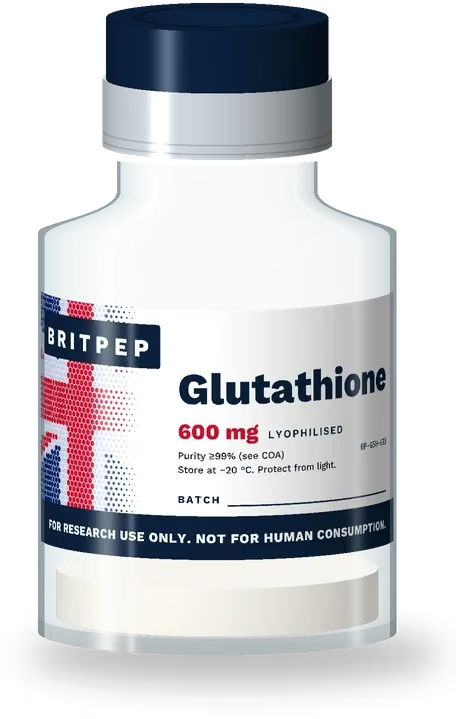
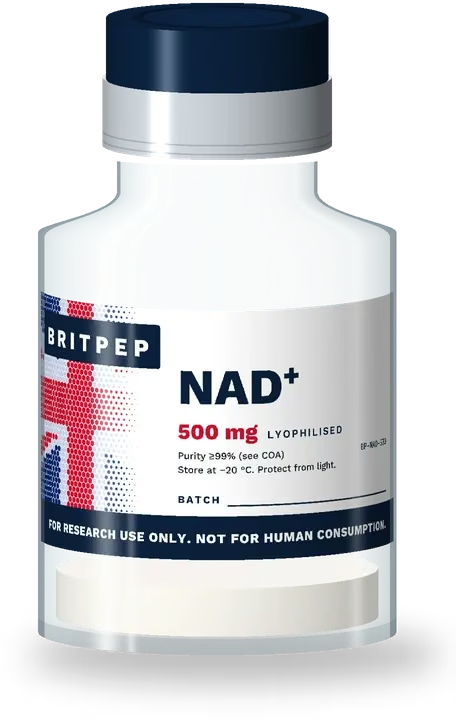
Britpep vials carry the lot number and the recommended storage condition on the label, and every lot’s certificate is available in the COA checker. Orders are prepared to order and dispatched in sealed glass vials with crimped caps. All products are for laboratory research use only.
References
- Wang W. Lyophilization and development of solid protein pharmaceuticals. Int J Pharm. 2000; 203:1-60. doi:10.1016/s0378-5173(00)00423-3. PubMed 10967427
- Manning MC, Chou DK, Murphy BM et al.. Stability of protein pharmaceuticals: an update. Pharm Res. 2010; 27:544-75. doi:10.1007/s11095-009-0045-6. PubMed 20143256
- D'Hondt M, Bracke N, Taevernier L et al.. Related impurities in peptide medicines. J Pharm Biomed Anal. 2014; 101:2-30. doi:10.1016/j.jpba.2014.06.012. PubMed 25044089
- Nguyen KTT, Frijlink HW, Hinrichs WLJ. Inhomogeneous Distribution of Components in Solid Protein Pharmaceuticals: Origins, Consequences, Analysis, and Resolutions. J Pharm Sci. 2020; 109:134-153. doi:10.1016/j.xphs.2019.10.010. PubMed 31606540
References were checked against PubMed and official UK sources at the time of writing. Summaries describe what each source reports; they are not claims about Britpep products.