What a COA is – and is not
A certificate of analysis (COA) is a document issued for a specific production lot, recording the tests performed on that lot and the results obtained. It is not a general product specification, and it is not a statement about the biological activity or suitability of the material for any particular application. Its value depends entirely on being traceable: the lot number on the certificate must match the lot on the vial.
For peptide medicines, specifications are organised around identification, purity and assay, and a 2009 review of the European and US pharmacopoeias proposed a consistent monograph structure along those lines [1]. Research certificates are simpler, but the same three ideas – is it the right molecule, how pure is it, and how much is there – are the best lens for reading them.
Header fields: product, lot and dates
- Product name and catalogue number (SKU) – identify the material and vial size.
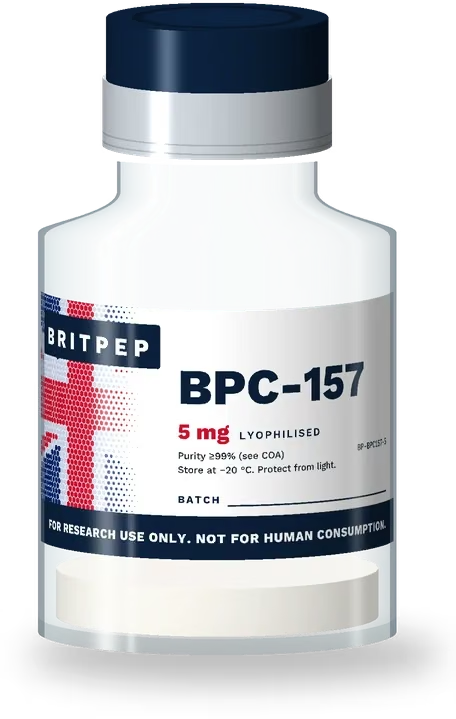
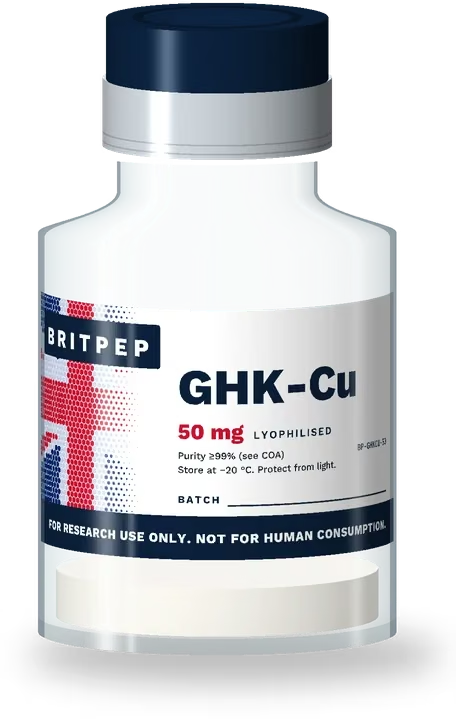
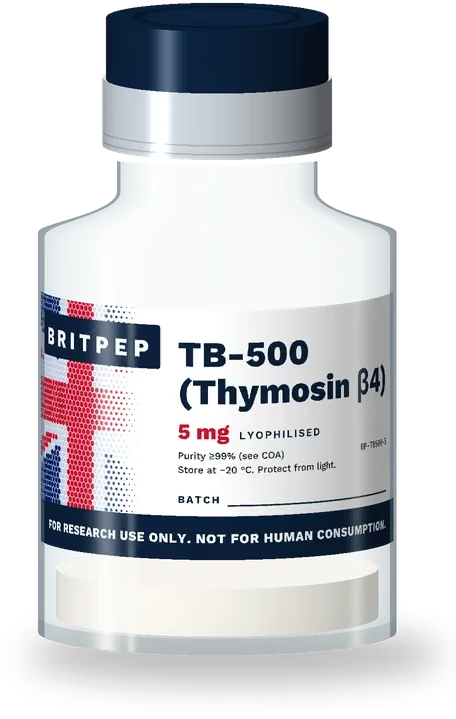
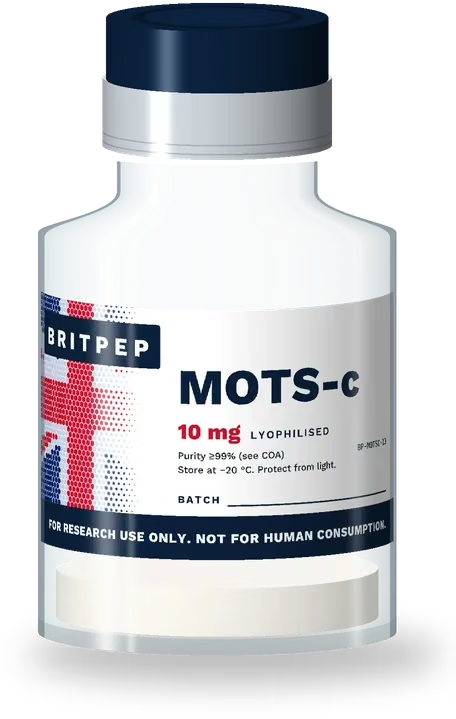
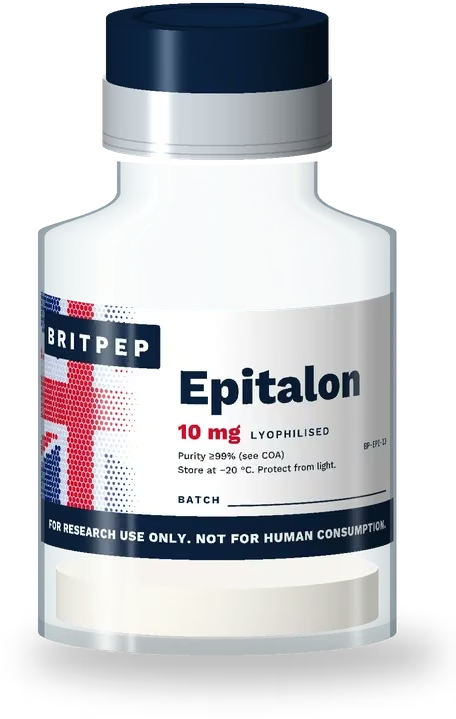
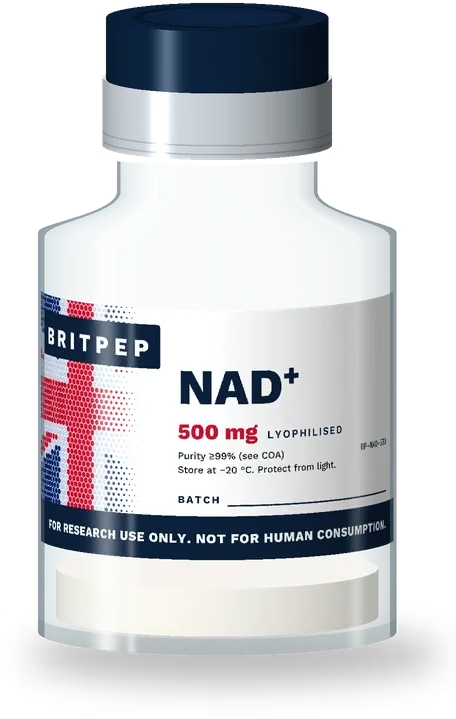
- Lot or batch number – the single most important field. On Britpep vials this is printed in the BATCH field of the label, and it is what you enter into the COA checker.
- Test date – when the analysis was performed. Combined with storage information it tells you how old the data are.
- Laboratory – who performed the tests. Independent third-party testing gives an additional degree of separation from the manufacturer.
Identity: sequence, formula and observed mass
The certificate should state the amino-acid sequence (or structure for non-peptide compounds), the molecular formula and the theoretical molecular weight. The key identity result is the observed mass from mass spectrometry, which should agree with the theoretical value within the stated tolerance.
Remember that identical mass does not exclude every alternative: diastereomers formed by racemisation during synthesis have the same mass as the target peptide [2]. Mass spectrometry confirms that the main component has the expected composition; HPLC indicates how much other material is present.
Purity: the HPLC result
Purity is usually reported as an HPLC area percentage – the main peak as a share of all integrated peaks at a UV wavelength. A good certificate includes the chromatogram itself, so you can see whether the main peak is sharp and well separated, and how large the minor peaks are. Typical minor peaks in synthetic peptides include deletion and insertion sequences, incompletely deprotected forms, oxidation products and degradation products [2].
The area-percentage figure does not account for water or counter-ions in the powder. A peptide can show high HPLC purity while the weighed solid still contains a substantial proportion of non-peptide mass. If an experiment depends on an accurate molar concentration, peptide content (from amino-acid analysis or nitrogen determination) is the relevant figure, and it is a separate test from purity [1]. Our article on HPLC and mass spectrometry explains the methods in more depth.
Counter-ion, appearance and water
Many research peptides are supplied as acetate or trifluoroacetate (TFA) salts. The impurity literature lists unwanted counter-ions such as TFA among peptide-related impurities [2], and a cell-culture study found that TFA at nanomolar concentrations reduced proliferation of osteoblasts and chondrocytes, recommending conversion to a hydrochloride or equivalent salt before biological testing [3]. If your assay is sensitive to this, check which counter-ion is stated.
Appearance is normally “white to off-white lyophilised powder” or similar; a description that does not match what you see in the vial is a reason to query the lot. Water content, where reported, matters because moisture is a principal driver of chemical degradation in solid protein and peptide products [4].
Storage statement
Certificates and labels typically give a storage temperature – commonly −20 °C for lyophilised peptides – along with protection from light and moisture. Chemical pathways such as deamidation, oxidation and hydrolysis, and physical changes such as aggregation, are all influenced by temperature and moisture [4]. The certificate describes the lot at the time of testing; how the vial has been stored since then determines whether that description still holds. See our storage and handling guide.
Vial content, peptide content and units
The amount printed on a vial – for example 5 mg or 10 mg – is the nominal fill of the lyophilised material. Because a lyophilised peptide contains counter-ion and residual water as well as peptide, the mass of peptide itself (the net peptide content) is lower than the gross weight of powder. Pharmacopoeial approaches therefore distinguish an assay or content test from the purity test [1]. When a certificate reports peptide content, it is usually expressed as a percentage of the gross weight.
For laboratory calculations this distinction is important. A molar concentration calculated from the gross fill weight will overstate the true peptide concentration, by an amount that depends on the counter-ion and water content. Where precise concentrations matter, laboratories determine peptide content directly, or quantify the solution analytically, rather than relying on the nominal fill.
Finally, check that units are unambiguous: purity as an HPLC area percentage, mass in daltons or g/mol, water as a percentage by weight, and storage temperature in degrees Celsius.
Red flags
- No lot number, or a lot number that does not match the vial.
- A purity figure with no chromatogram or method details.
- An observed mass that is missing, or that differs from the theoretical mass beyond the instrument tolerance.
- Identical certificates reused across different products or lots.
- A certificate that makes claims about human use or effects – a COA is an analytical document, not marketing.
Each Britpep lot is published to the COA checker before that lot is offered for sale, and every product page lists the certificates for its current lots. All products are supplied strictly for laboratory research use only.
References
- Vergote V, Burvenich C, Van de Wiele C et al.. Quality specifications for peptide drugs: a regulatory-pharmaceutical approach. J Pept Sci. 2009; 15:697-710. doi:10.1002/psc.1167. PubMed 19750489
- D'Hondt M, Bracke N, Taevernier L et al.. Related impurities in peptide medicines. J Pharm Biomed Anal. 2014; 101:2-30. doi:10.1016/j.jpba.2014.06.012. PubMed 25044089
- Cornish J, Callon KE, Lin CQ et al.. Trifluoroacetate, a contaminant in purified proteins, inhibits proliferation of osteoblasts and chondrocytes. Am J Physiol. 1999; 277:E779-83. doi:10.1152/ajpendo.1999.277.5.E779. PubMed 10567002
- Manning MC, Chou DK, Murphy BM et al.. Stability of protein pharmaceuticals: an update. Pharm Res. 2010; 27:544-75. doi:10.1007/s11095-009-0045-6. PubMed 20143256
References were checked against PubMed and official UK sources at the time of writing. Summaries describe what each source reports; they are not claims about Britpep products.